New immersive studio enhances global learning

New immersive studio enhances global learning

Stanford Online has opened an immersive learning studio with a large LED wall, cinema-quality cameras and a green screen cyclorama for virtual production, along with AI-assisted workflows for faculty. The announcement mentions augmented and virtual reality only as future plans, and the studio itself is a video production facility.

Source
Stanford Report
Published
In edition
No. 1 — AI starts writing the immersive web
Sections
Immersive Web

Read the full story at Stanford Report at Stanford Report

This page is our short summary. The full article is published by Stanford Report; the link above takes you to their site.

Also in No. 01

Immersive Web

XR Global Launches the World’s First Augmented Reality Online Casino Experience Across iOS, Android and the Immersive Web

In a press release, XR Global says it has launched augmented reality casino games, including slots, roulette and blackjack, that run on iOS, Android and the immersive web without special hardware. The company describes its cross-platform technology as patent pending and is pitching licences to online and social casino operators.

Business Wire

Original article at Business Wire

WebXR3D on the Web

Introducing Three-Live: turning AI-generated Three.js into interactive 3D, AR, and WebXR across web and mobile

Google has released Three-Live, an Apache 2.0 developer preview library that compiles AI-generated Three.js code into glTF and USDZ files in a few milliseconds. On the web it runs scripts in a sandboxed Web Worker and offers an xr-live package for hand gestures, spatial interface elements and handoff into immersive WebXR sessions.

Google Open Source Blog

Original article at Google Open Source Blog

WebXR3D on the Web

WebXR-based mobile point cloud rendering and semantic segmentation using depth data and voxel fusion

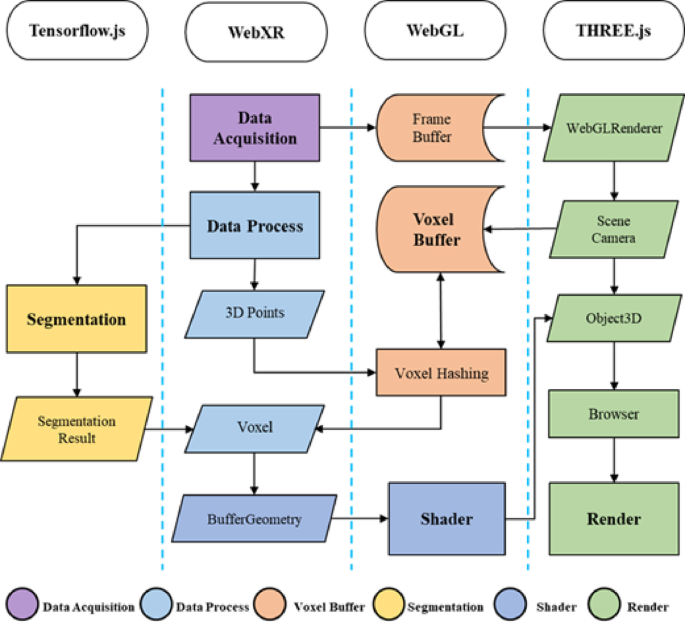
Researchers at National Chung Hsing University describe a mobile browser system, built on WebXR, Three.js and WebGL, that turns data from the WebXR Depth Sensing Module into point clouds and runs semantic segmentation on the device. Fusing results from several viewpoints improved accuracy in tests on a single Pixel 6 Pro running Chrome.

Scientific Reports

Original article at Scientific Reports