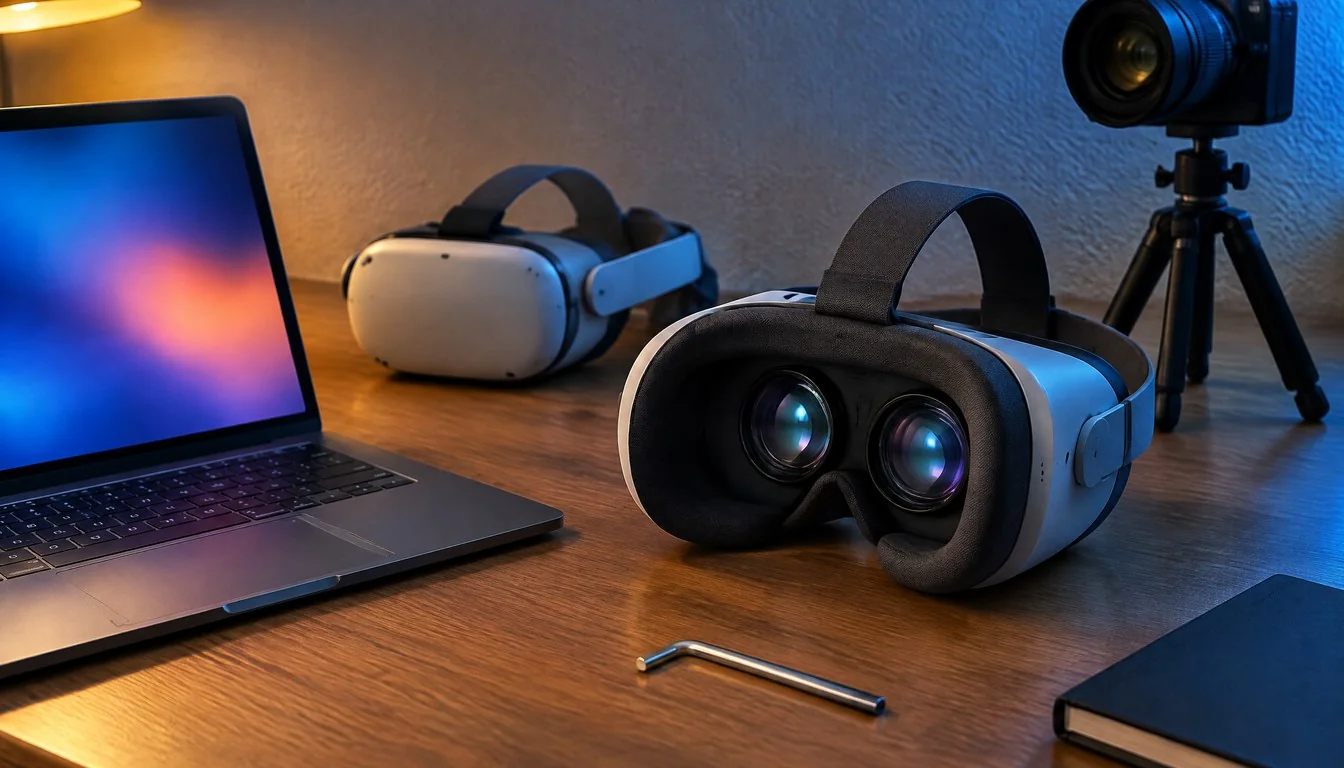
How Do VR Headsets Work? 12-Step Lab, 60 Min [2026]

How Do VR Headsets Work? 12-Step Lab, 60 Min [2026]

A hands-on tutorial explains how VR headsets render a separate view per eye and then walks through a 12-step WebXR lab built with Three.js and Vite. Readers measure interpupillary distance, field of view, head pose and frame timing on a headset or emulator, with a reminder that WebXR requires HTTPS or localhost.

Source
Shattered
Author
Marcus Bell
Published
In edition
No. 1 — AI starts writing the immersive web
Sections
WebXR3D on the Web

Read the full story at Shattered at Shattered

This page is our short summary. The full article is published by Shattered; the link above takes you to their site.

Also in No. 01

WebXR3D on the Web

Introducing Three-Live: turning AI-generated Three.js into interactive 3D, AR, and WebXR across web and mobile

Google has released Three-Live, an Apache 2.0 developer preview library that compiles AI-generated Three.js code into glTF and USDZ files in a few milliseconds. On the web it runs scripts in a sandboxed Web Worker and offers an xr-live package for hand gestures, spatial interface elements and handoff into immersive WebXR sessions.

Google Open Source Blog

Original article at Google Open Source Blog

WebXR3D on the Web

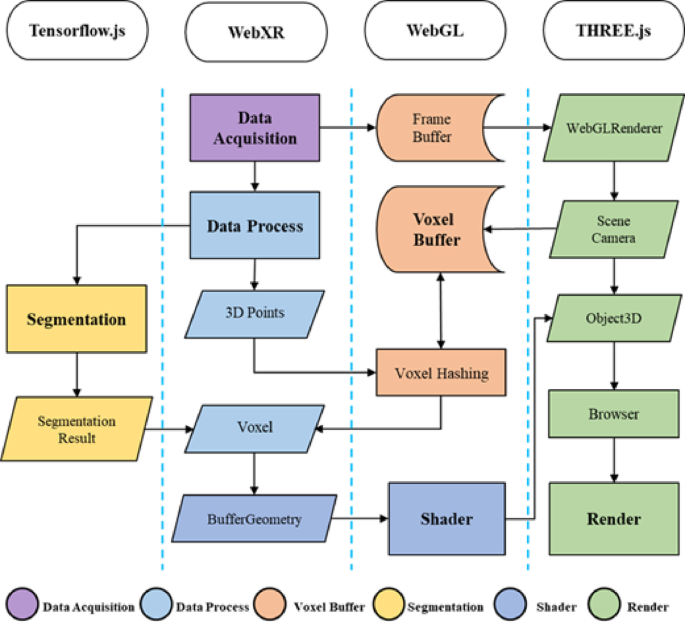
WebXR-based mobile point cloud rendering and semantic segmentation using depth data and voxel fusion

Researchers at National Chung Hsing University describe a mobile browser system, built on WebXR, Three.js and WebGL, that turns data from the WebXR Depth Sensing Module into point clouds and runs semantic segmentation on the device. Fusing results from several viewpoints improved accuracy in tests on a single Pixel 6 Pro running Chrome.

Scientific Reports

Original article at Scientific Reports

WebXR3D on the Web

Build and Stream Browser-Based XR Experiences with NVIDIA CloudXR.js

NVIDIA's CloudXR.js is a JavaScript SDK that streams GPU-rendered XR content from an OpenXR server to web browsers and headsets without an app store build. The post walks through creating a session and sending tracking data inside a WebXR render loop, and lists requirements including Meta Quest or Pico 4 Ultra headsets and Wi-Fi 6.

NVIDIA Technical Blog

Original article at NVIDIA Technical Blog